 English
 Spanish
 Callback


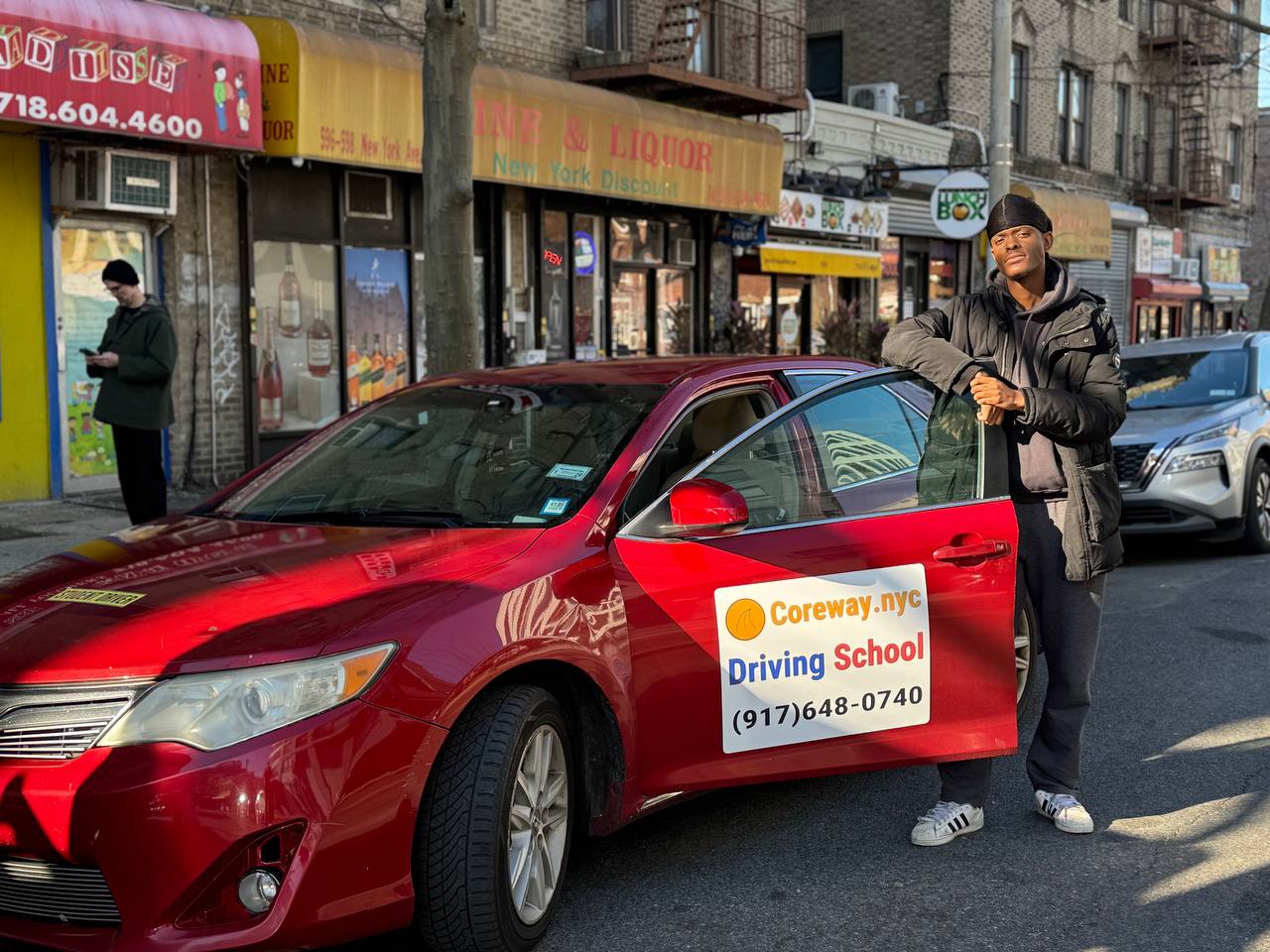
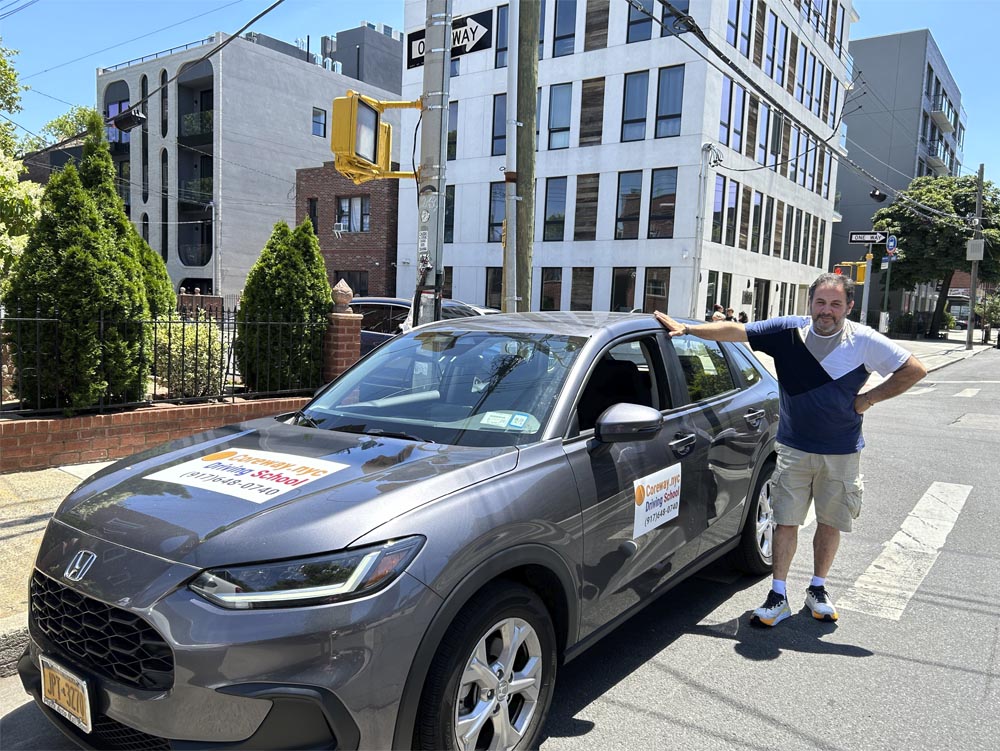
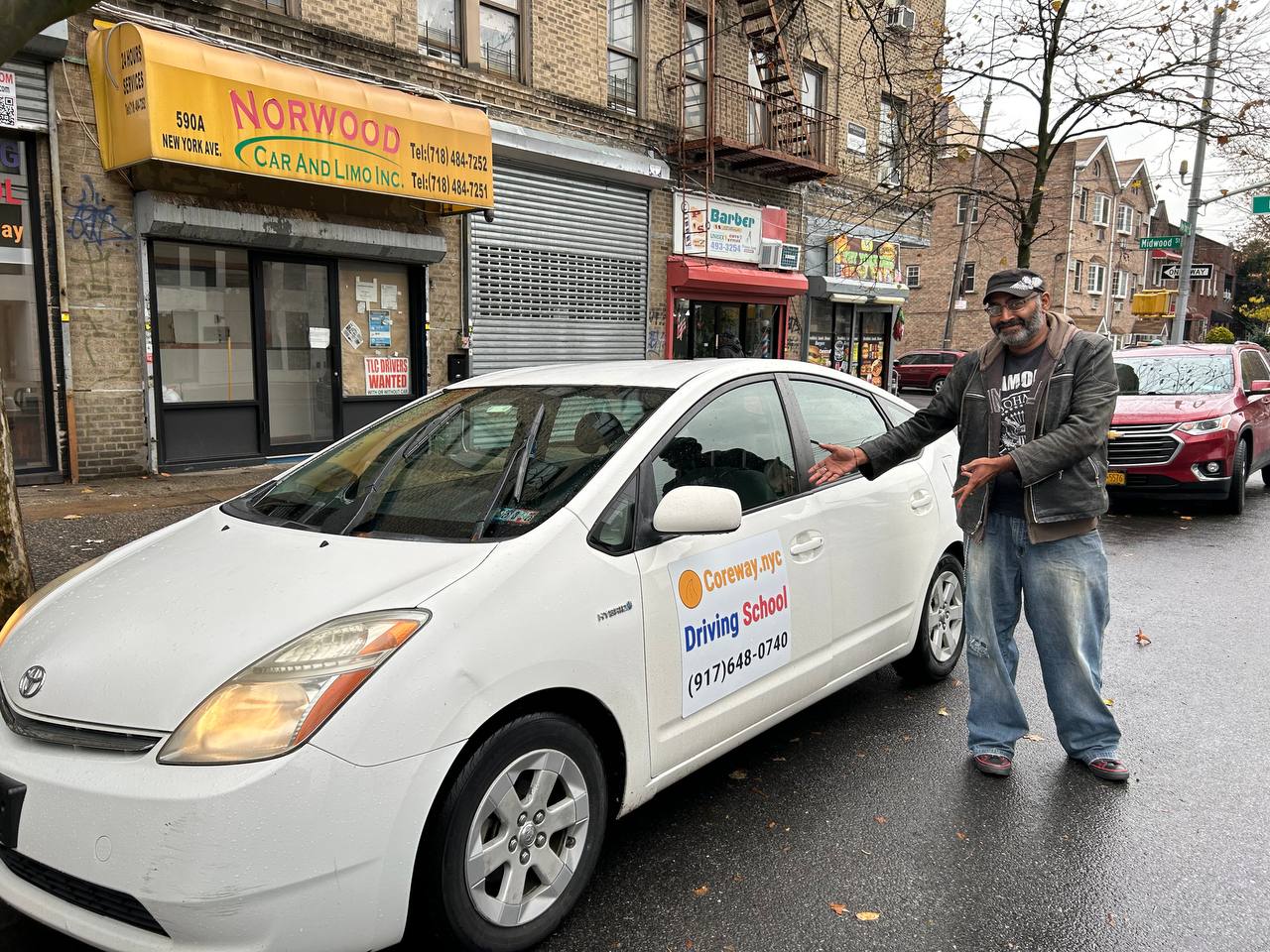


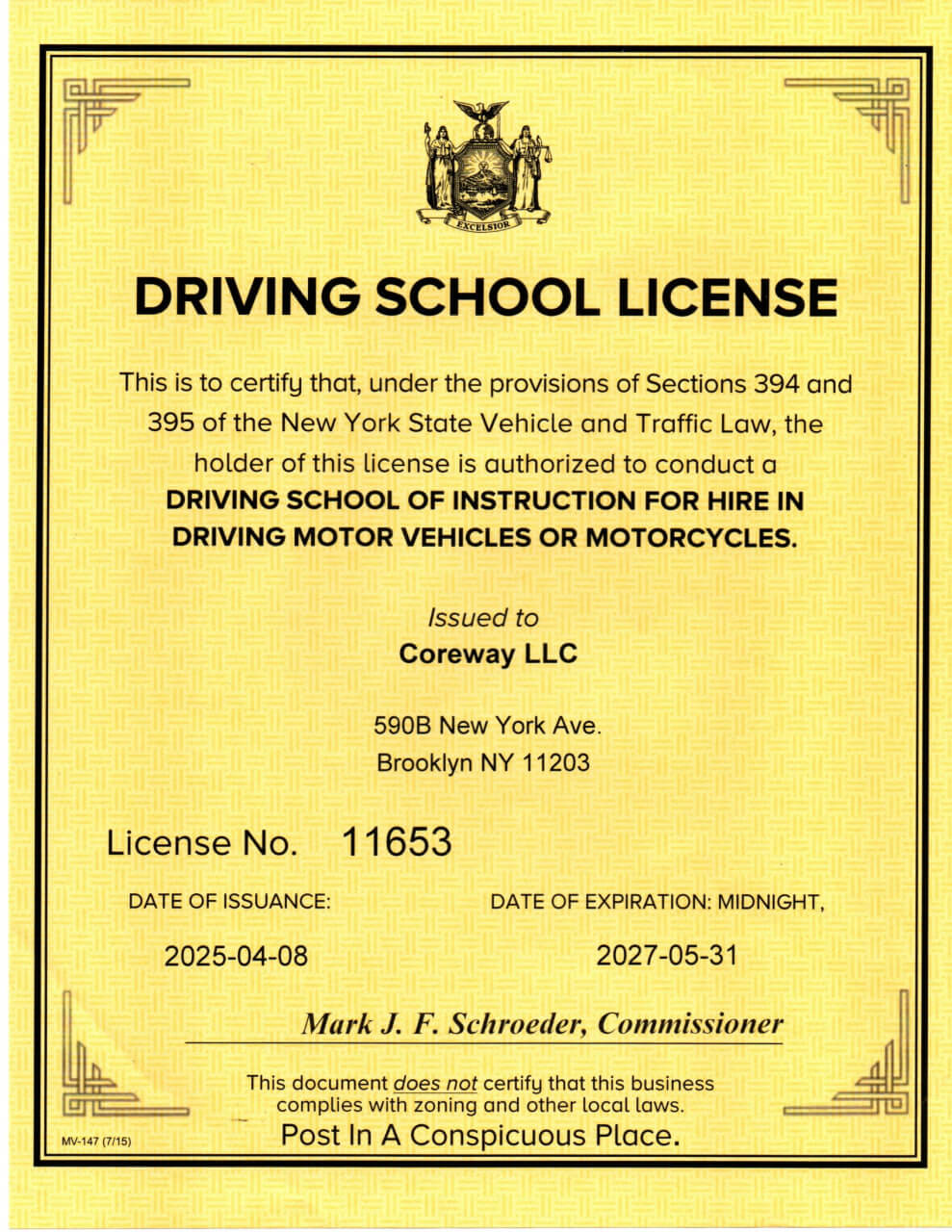
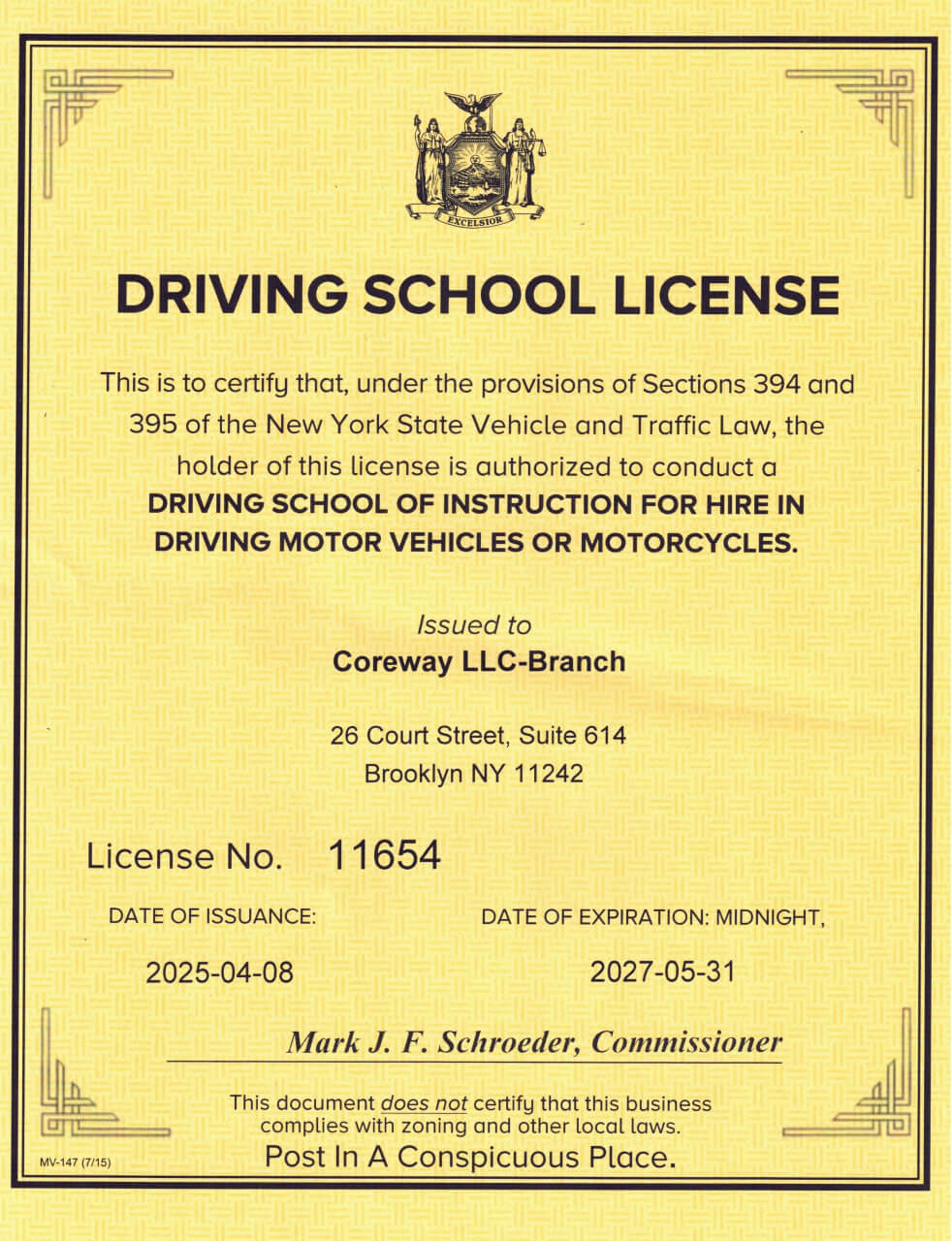


Brooklyn has six DMV road test sites: Beverly Road, Coney Island, Ditmas Avenue, Red Hook, Seaview and Starrett City. The rules, the documents and the car requirements are the same at all six; only the line-up and the streets around it change. Here is how test day works, what to bring and what kind of car you need.
How the road test works in Brooklyn
- Book your appointment. You need a valid learner permit, proof of the 5-hour pre-licensing course (an original, unexpired MV-278, an MV-285 from driver education, or an online course reported to the DMV) and at least one unused road test. Book online through the DMV or by phone at 1-518-402-2100. Tests are almost always on weekdays, and you may choose any site, wherever you live. We can also book it for you, including rush appointments.
- Check for cancellations and arrive early. The DMV can cancel or move tests for bad weather or road construction, so check its cancellations and closings page before you leave. Arrive up to 15 minutes early: if you are late, the examiner may not test you, and you will have to reschedule. The sites are outdoor curbs, not all with a shelter, so dress for the weather.
- Line up in the car. Test cars wait in a line at a designated curb, at most Brooklyn sites signed "NYS Road Test Only, Monday-Friday 8AM-5PM." Join the end of the line, stay in the car and move up as cars leave. The table below shows where each line forms.
- Document check. The examiner checks your papers and photographs you, your documents, your permit and the car; in our experience this takes a couple of minutes. The examiner then sits in the front passenger seat, so that seat belt must be clean and free. Only your accompanying driver may come, and they typically wait at the site. Recording is not allowed, so switch off dash cams. The examiner can refuse the test over missing documents, an improperly licensed accompanying driver or a car that does not comply with the law.
- The drive. The examiner picks the route on city streets. You must show at least three left and three right turns, a controlled intersection (traffic light, STOP or YIELD sign), an uncontrolled intersection, parallel parking and a three-point turn (K-turn). Parallel parking is part of every test, and your wheels must end up no more than one foot from the curb. Know your wipers, defroster, lights and windows: being unfamiliar with the controls is scored. Adaptive cruise control and automatic parallel parking are not permitted, and you must not rely on cameras or sensors.
- How long it takes. The DMV publishes no official length. In our experience the drive itself usually takes about 10-20 minutes, sometimes less, depending on the site and traffic; with the paperwork and the wait in line, plan to spend longer at the site.
- Scoring. The examiner marks errors on the DMV's standard score sheet (categories below). The DMV publishes no point values, passing score or official list of automatic fails. In our experience, tests are most often lost on safety and right-of-way errors: pulling out without a real gap or a look over your shoulder, rolling through a STOP sign, turning right on red (banned in New York City unless a sign allows it), not stopping for a pedestrian in a crosswalk, or entering a one-way street the wrong way.
- Your result. It is posted at roadtestresults.nyrtsscheduler.com after 6 p.m. on test day; you need your 9-digit DMV ID number and date of birth. Here is how to check your DMV road test results.
- If you pass. An interim license becomes available online; carry it with your photo permit until the photo license arrives by mail in about two weeks. Every new driver then has a six-month probation, during which a conviction for speeding, phone use or certain other violations means a 60-day suspension.
- If you don't pass. Your permit stays valid until it expires, and you must wait at least 14 days to retest. The permit fee covers two road tests; if you fail both, two more cost $10 (see how much a road test costs in NYC). If the permit expires first, you need a new one. Use the wait for a few driving lessons on what went wrong.
- Rescheduling or cancelling. Use the DMV scheduler or call 1-518-402-2100; if we booked your test, contact us to change it. Do it ahead of time rather than not showing up.
What the examiner scores
The DMV's Class D score sheet has five categories:
| Category | Examples of errors |
|---|---|
| Leaving the curb | Not checking traffic or the blind spot, not signaling |
| Turning and intersections | Poor judgment, not waiting near the center for a left turn, turns too wide or too short |
| Parking, backing and U-turns | Unable to park or finish the three-point turn, too far from the curb, too many corrections, poor observation while backing |
| Driving in traffic | Not keeping right, wrong lane, following too closely, too fast or too slow, not yielding, careless lane changes |
| Vehicle control | Rough acceleration, poor steering, late or abrupt braking, poor reactions to emergencies, unfamiliar with the controls |
Brooklyn road test sites at a glance
The examiner picks the route on test day, so read the last column as the kind of driving you may meet, not a fixed route. Each site's page has a street-by-street guide.
| Site | Where you line up | What the streets are like |
|---|---|---|
| Beverly Road (East Flatbush) | Schenectady Ave, cemetery-side curb between Tilden Ave and Beverly Rd, facing south toward Beverly Rd | A small residential grid: narrow one-way side streets, two all-way stops in a row, speed bumps by a playground |
| Coney Island | Bayview Ave between Neptune Ave and W 33rd St, facing W 33rd St (northwest-bound side of the divided block) | A small pocket next to Sea Gate: very narrow two-way streets without lane lines, an all-way stop, a short dead end, buses and a school zone |
| Ditmas Avenue | South curb of Ditmas Ave by the National Grid facility, from E 83rd St, facing E 86th St | An industrial strip with fast two-way traffic and no center line, one-way side streets that alternate direction, busy four-lane Ralph Ave |
| Red Hook | South curb of Bay St between Hicks St and Henry St, facing Henry St | A small grid by the ballfields: a truck route shared with cyclists, narrow two-way streets, all-way stops, lane arrows and DO NOT ENTER at Columbia St |
| Seaview (Canarsie) | South (Canarsie Park) curb of eastbound Seaview Ave, just before E 104th St, facing E 104th St | A divided avenue with left turns through the median, STOP signs on the side streets, all-way stops, speed humps, dead ends |
| Starrett City | South curb of eastbound Flatlands Ave between Pennsylvania Ave and Van Siclen Ave, facing Van Siclen Ave | Wide divided avenues with turn bays and trucks, bike lanes, one-way loops with STOP signs, bus lanes on Pennsylvania Ave |
Documents you need for a road test in Brooklyn
Checklist for every applicant
- Your physical photo learner permit: the card itself.
- Your original MV-278, the 5-hour course certificate. Copies are not accepted, and you turn in the original to the examiner. It is valid for one year from issue and must be valid when you book; make sure it still is on test day. Lost it? The issuing school can give you a duplicate with the same expiration date.
- Or no certificate at all. After high school or college driver education, your MV-285 (valid for two years) must be on file with the DMV instead. After the online pre-licensing course (18 and older only), your completion is reported electronically, and there is nothing to show.
- Glasses or contact lenses, if your permit requires corrective lenses.
- Form MV-262, if you are under 18.
- A licensed accompanying driver and a car that meets DMV requirements, both covered below. Keep the registration and insurance card in the car.
The appointment confirmation is not a required document, but keep the details on your phone.
Extra rules if you are under 18
- Wait at least six months after getting your permit before you schedule the test.
- Bring a completed MV-262 to every attempt: your parent or guardian certifies at least 50 hours of practice, including at least 15 after sunset.
- In New York City, junior permit holders may drive only from 5 a.m. to 9 p.m., with a parent, guardian, driver education teacher or driving instructor aged 21 or older, in a car with dual brakes.
- A junior license (Class DJ) does not allow driving anywhere in the five boroughs. A 17-year-old who completed driver education and has an MV-285 on file can get a regular Class D license, which has no such limit. The DMV suggests that junior permit holders who will drive a lot in the city wait until 18 to take the test.
Your accompanying driver
Your accompanying driver must be at least 21 if you drive yourself to the site, or at least 18 if they drive you there, and must carry a physical driver license valid for the test car. Mobile ID is not accepted for either of you, and no one else may come along.
If you test in Coreway's car
Your Coreway instructor is your licensed accompanying driver, and we bring a registered, insured and inspected car. You bring only your own documents from the checklist above. Still need the certificate? Take our 5-hour pre-licensing course in Brooklyn.
Vehicle requirements for the road test
Testing in your own car or a family member's? It must meet these DMV requirements on test day.
What the DMV requires
- Valid registration, insurance and inspection.
- A clean car in good working order, correctly equipped, with working doors and seat belts. The front passenger seat belt must be clean and available for the examiner.
- Two permanent license plates, assigned to the car and mounted on it. In-transit permits are not accepted.
- No three-wheeled vehicles (two wheels in front, one in back) for any road test since April 20, 2022.
- Driver-assist limits. No adaptive cruise control or automatic parallel parking. Cameras, parking sensors, blind-spot warning and similar aids may stay on, but you must not rely on them.
- No recording. Turn off dash cams before the test.
Two more points: by law, tires need at least 2/32 of an inch of tread, and dual brakes are not on the DMV's road test checklist. If you are under 18, though, remember that junior permit holders may drive in New York City only in a car with dual brakes.
Reasons a car can be turned away at the site
- Expired registration, inspection or insurance
- Temporary or in-transit plates, or a missing plate
- A passenger seat belt that is broken, dirty or buried under clutter
- A door that does not open or close properly
- A dirty car, or a defect that keeps it from working properly (check the lights, brakes, horn and tires the day before)
- A three-wheeled vehicle, or a dash cam that is recording
The easy option: a DMV-compliant car from Coreway
Order a car for your road test in Brooklyn and none of this is your problem. You get:
- A well-maintained Toyota Corolla that meets DMV requirements: registered, insured and inspected, with dual brakes.
- Your instructor as the licensed accompanying driver, meeting you about 10-15 minutes before the appointment, at one of our offices or directly at the test site.
- Service at all six Brooklyn sites, in English, Spanish, Russian or Ukrainian.
- An optional 45-minute warm-up lesson in the same car right before the test, held outside the test area.
- Booking of your appointment, standard or rush, if you still need one.
No practice in Brooklyn road test areas
Practicing on the test streets around any Brooklyn road test site is not allowed. New York DMV regulations bar learner permit holders from driving in a designated road test area except to take the test (15 NYCRR §4.1) and bar driving instructors from giving lessons there (15 NYCRR §76.16(c)). The DMV also says plainly that practice driving is not allowed at test sites. It publishes no maps of these areas, so we stay off the streets around every site: we practice the same maneuvers on comparable streets elsewhere and come to the site only on test day. The rule covers you too: don't rehearse the route with family or friends. Citywide, learners also may not drive in parks, on play streets or on blocks with a public park or playground entrance (34 RCNY §4-07(f)).
Frequently Asked Questions
-
How many road test sites are there in Brooklyn?
Six: Beverly Road, Coney Island, Ditmas Avenue, Red Hook, Seaview and Starrett City. You can book any of them, wherever you live.
-
How long does a road test in Brooklyn take?
In our experience, a couple of minutes of paperwork and usually about 10-20 minutes of driving, sometimes less, plus any wait in the line. Arrive up to 15 minutes early. The DMV publishes no official length.
-
What documents do I need for my road test?
Your physical photo learner permit; the original MV-278 (no copies) unless you have an MV-285 on file or took the course online; the MV-262 if you are under 18; glasses if your permit requires them; and a licensed accompanying driver.
-
Can I take the road test in my own car?
Yes, if it has valid registration, insurance and inspection, two permanent plates, working doors and seat belts, and is clean and in good working order. If you are under 18, keep in mind that junior permit holders may drive in New York City only in a car with dual brakes. Or skip all of this and order a car for your road test in Brooklyn from us.
-
Do I need to bring a licensed driver if I use Coreway's car?
No. Your Coreway instructor is your accompanying driver and meets you about 10-15 minutes before the appointment. You bring only your own documents.
-
When will I get my road test results?
Online, after 6 p.m. on the day of your test, with your 9-digit DMV ID number and date of birth. See how to check your DMV road test results.
-
What happens if I fail the road test?
Your permit stays valid until it expires, and you must wait at least 14 days to test again. The permit fee covers two road tests; if you fail both, two more cost $10.
-
Can I practice on the road test streets before my test?
No. DMV regulations (15 NYCRR §4.1 and §76.16(c)) bar permit holders from driving in a road test area except to take the test, and bar driving instructors from teaching there. We practice the same maneuvers on similar streets elsewhere.